
How to Clean Vinyl Records Safely: Brush, Wet or Machine
A soft brush before every play clears most dust; stuck-on grime needs a wet clean. Here's what conservators recommend, and what to avoid entirely.
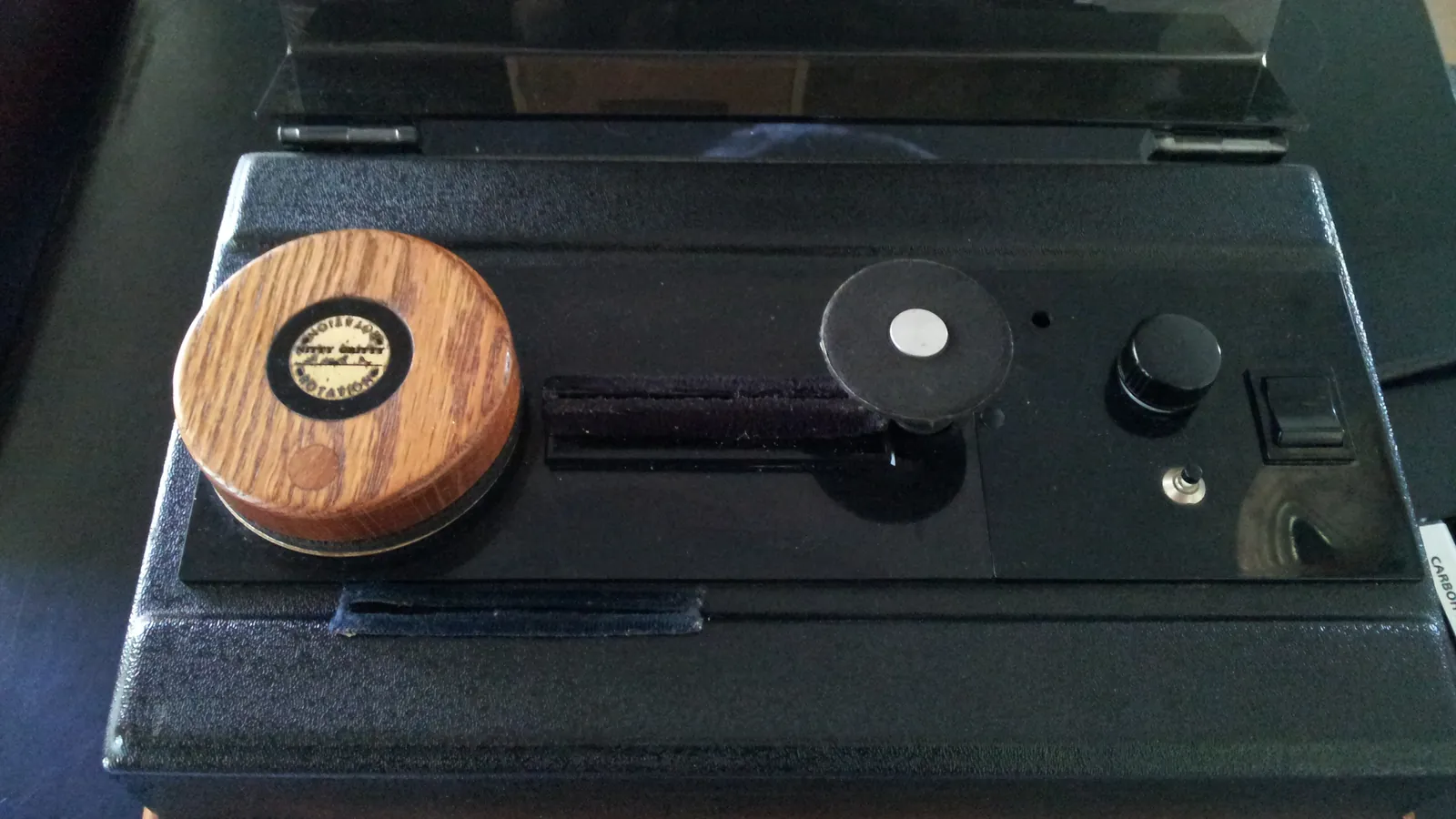
.jpg)
A soft brush before every play removes most of what actually causes surface noise: loose dust. For grime that a brush cannot shift — fingerprints, smoke residue, the general griminess of a second-hand find — you need a wet clean, either by hand or with a machine. What you should never use is a household cleaner, a paper towel, or a rag pulled from a kitchen drawer.
That is the short version. The longer version, drawn from how libraries and archives actually care for their sound collections, covers handling, the dry-cleaning habit worth building, the wet-cleaning options and what separates them, and the mistakes that do more harm than the dirt ever would.
None of this needs to be expensive or elaborate. A five-minute brush habit prevents most of the damage a record picks up in normal use, and a proper wet clean is something most collectors do a handful of times a year, not every time a record comes off the shelf.
Handle it properly first
Cleaning starts before you touch a cleaning product. Hold a record by its edges and label only, never across the grooves, and keep hands clean and dry. This single habit prevents a large share of the fingerprints and oils that later need cleaning off in the first place.
It sounds too simple to matter, but most of what a deep clean removes from a secondhand record is exactly this: skin oils and dust ground in by years of being picked up the wrong way. A collection handled correctly from the start needs far less wet cleaning over its lifetime.
Everyday dry cleaning: brush before you play
A carbon-fibre or velvet brush, used in one light pass before each play, lifts loose dust before the stylus grinds it into the groove — which is how a lot of "wear" actually happens. It is worth cleaning the stylus itself just as often: a build-up of dust on the needle transfers straight back onto the next record it touches, undoing the brushing you just did.
This single habit, done consistently, prevents more damage than any wet-cleaning method fixes after the fact.
When a record needs more than a brush
Once dust has turned into grime — fingerprint oils, smoke film, general second-hand-shop dirt — brushing alone stops being enough. The options scale roughly by cost and effort:
| Method | What it involves | Best for |
|---|---|---|
| By hand | Distilled water, a small amount of a mild surfactant, applied with a microfibre cloth or soft brush, rinsed and air-dried | Occasional cleaning, small collections, tight budgets |
| Spin bath / manual cleaner | A manual device that holds the record while you apply fluid and wipe with a pad as it turns | Regular cleaning without a big upfront cost |
| Vacuum record-cleaning machine | Fluid applied and then vacuumed off through a slot, pulling grime out of the groove rather than just moving it around | Larger collections, second-hand buying, deeper cleans |
| Ultrasonic cleaner | Records are rotated through a tank of fluid agitated by ultrasonic waves, which loosens grime without any physical contact with the groove | Bulk cleaning, the gentlest option for contact-sensitive records |
None of these need to be expensive to be effective — a careful hand clean with the right fluid outperforms a rushed pass through an expensive machine. The step that matters most across all four methods is the same one: work in gentle, circular motions along the groove direction, never straight across it, and let the record air-dry fully before it goes anywhere near a sleeve.
Do this in the app:Sleevewise · Collection
A note on homemade cleaning fluids
Plenty of online advice suggests mixing your own cleaning fluid, often with isopropyl alcohol. Treat this with caution rather than as a default: the right ratio and the right grade of alcohol matter, and getting it wrong can leave a residue or, in rare cases, affect the vinyl itself. If you're not confident about a home-mixed fluid, the safer default is a purpose-made record-cleaning fluid or the plain distilled-water-and-mild-surfactant approach conservators use — both are inexpensive and remove the guesswork.
What archives actually use
Formal conservation practice backs the same basic approach, scaled up. The Council on Library and Information Resources' report on the care of recorded sound describes archival machine cleaning using a dilute Tergitol surfactant solution in distilled water — a mild, specific, non-household cleaning agent, not an improvised mix. The Canadian Conservation Institute similarly notes that discs with real deposits on them are best handled with a proper record-cleaning machine rather than repeated hand-wiping.
The goal of cleaning a record is to remove what's on top of the groove, not to do something to the groove itself.
What to avoid
A short, firm list, straight from conservation guidance:
- Household cleaners and solvents. Anything not formulated for vinyl risks leaving a residue or attacking the compound itself.
- Paper towels and rough cloths. They can scratch a surface that a microfibre cloth or dedicated pad will not.
- Wet labels. Keep fluid off the label; a soaked label can wrinkle, smear or lift entirely.
- Over-cleaning. The CCI puts this plainly: "avoid frequent or improper cleaning, which may cause more problems than if the media were left alone." Clean when a record needs it, not on a fixed schedule regardless of condition.
Dry completely, then re-sleeve
Let a record dry fully before it goes back in its sleeve — trapped moisture is its own problem. Use a fresh inner sleeve rather than the one the record came in if that original sleeve is worn: the Library of Congress notes that a good inner sleeve looks slightly frosted and feels slippery, while a poor one looks clear and feels tacky against the vinyl. A tacky sleeve is actively working against a record you just spent time cleaning.
Special cases
A couple of situations call for extra caution rather than the standard routine:
- Mouldy second-hand finds. Mould calls for more care than a standard clean, and in a bad case, professional advice — don't assume a quick wipe is enough, and don't inhale spores while inspecting a musty sleeve or disc. A musty smell that lingers after a normal wet clean is a sign to stop and get more specific guidance rather than repeating the same clean and hoping.
- Shellac 78s. These are a different, more brittle material than modern PVC vinyl, and the wet-cleaning approaches above are not automatically safe for them. Check archival guidance specific to shellac before wet-cleaning a 78, and confirm the format and speed you're actually dealing with first.
Scratches versus dirt
Not everything that sounds bad is dirt, and cleaning will not fix a scratch. A light tick that repeats once per rotation, in the same spot every time, is usually physical damage to the groove — cleaning won't touch it. A softer, more general hiss or crackle that changes as the record plays is more often dust or residue, and is exactly what cleaning is for. Knowing the difference saves you from over-cleaning a record whose real problem cleaning can't solve.
Frequently asked questions
01How often should you clean vinyl records?
Brush lightly before every play. Wet-clean only when a record actually needs it — visible grime, a fingerprint, persistent surface noise a brush doesn't fix — rather than on a fixed schedule, since conservation guidance specifically warns that over-cleaning can cause more problems than leaving a record alone.
02Can you clean vinyl records with just water?
Distilled water alone can lift light dust, but archival cleaning generally uses a small amount of a mild, non-household surfactant mixed into distilled water for anything beyond light dust, since plain water alone struggles with oils and grime.
03Is a record-cleaning machine worth it?
For a larger collection or frequent second-hand buying, yes: vacuum and ultrasonic machines pull grime out of the groove rather than just moving it around, and conservation guidance recommends a proper cleaning machine specifically for discs with real deposits on them.
Clean before you catalogue, not after
A record cleaned properly before it goes on the shelf stays cleaner longer, since dust and residue left in the groove keep doing quiet damage in storage. It also affects how you should grade it: surface noise from dirt is not the same defect as surface noise from wear, and a clean makes it possible to tell which one you're actually grading.
This matters most right after you bring records home from a fair or a shop, before they join the rest of the collection. A quick clean at that point, rather than whenever the noise finally becomes annoying, is what keeps a whole shelf in better condition rather than just the records you remember to deal with.
Sources
- Caring for audio, video and data recording media — Canadian Conservation Institute
- The Care and Handling of Recorded Sound Materials — CLIR
- Cylinder, Disc and Tape Care in a Nutshell — Library of Congress / NEDCC
Keep digging
Colored Vinyl vs Black: Does It Sound Worse?
Solid and translucent colours generally sound the same as black vinyl today. Marble, splatter and picture discs are the riskier tiers to know.
180g Vinyl vs Standard Weight: Does It Sound Better?
180g and standard records use the same stampers and groove depth. The extra weight adds durability and a premium feel, not automatically better sound.
How to Store Vinyl Records: What Archivists Recommend
Store LPs upright, never stacked flat, with stable temperature and humidity. Here's the shelving, climate and sleeve advice from archival guides.