
How to Store Vinyl Records: What Archivists Recommend
Store LPs upright, never stacked flat, with stable temperature and humidity. Here's the shelving, climate and sleeve advice from archival guides.
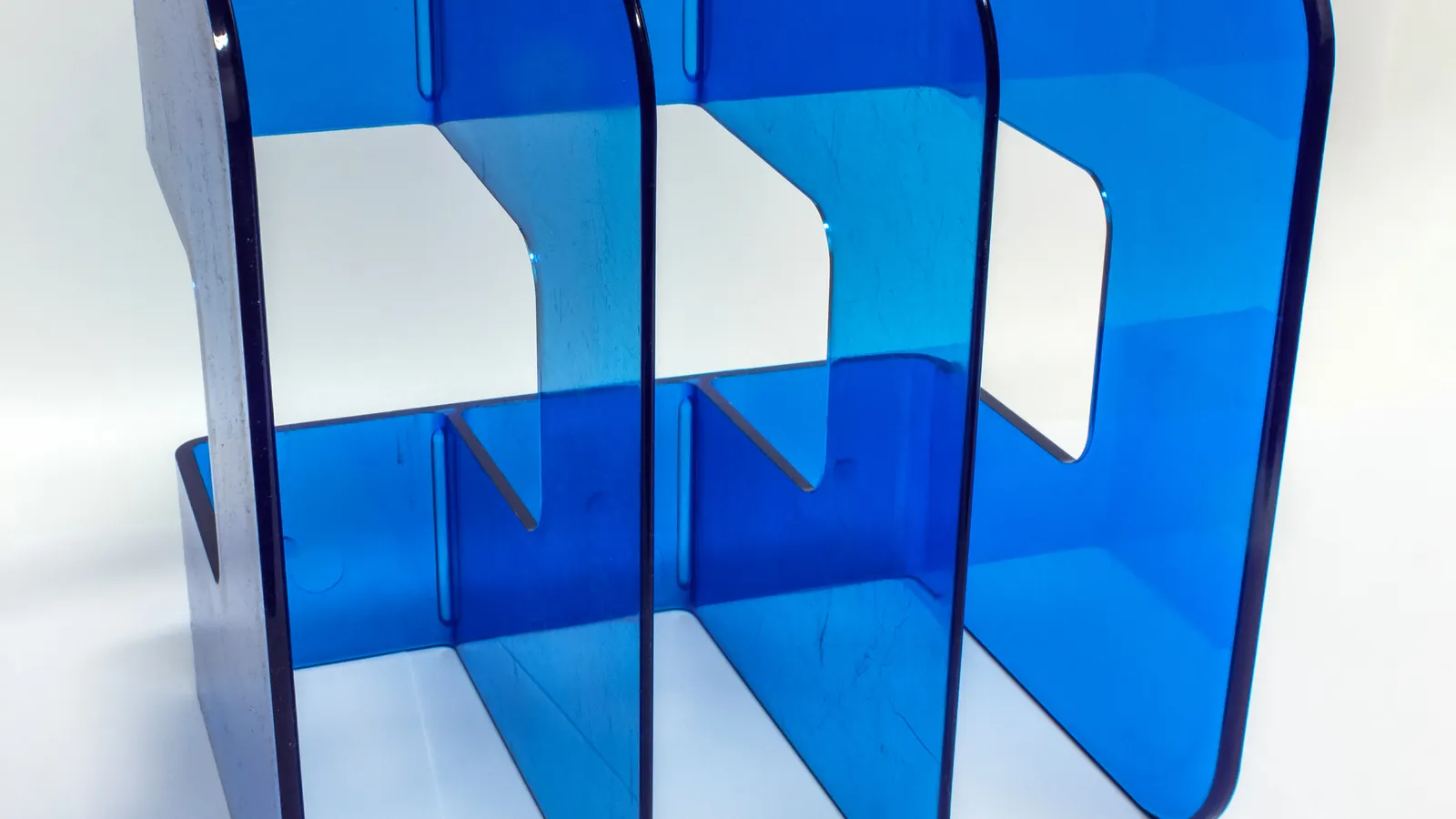

Store records upright, never stacked flat, in a room with stable temperature and humidity rather than a perfect one. That is the consistent advice from the Library of Congress, the International Association of Sound and Audiovisual Archives (IASA) and the Canadian Conservation Institute (CCI) — three institutions whose job is keeping recordings playable for decades, not just until next year.
Most of what damages a record collection in storage is slow and avoidable: weight pressing down on a flat stack, a shelf that bows under real load, a garage that swings from cold to hot with the seasons. None of it requires special equipment to fix, just the right habits.
None of this guidance is really about rare or valuable records specifically. It is closer to plain maintenance — the same handful of rules protect a £5 charity-shop find and a first pressing worth ten times that, because vinyl degrades the same way regardless of what it cost.
Always upright, never stacked flat
Every archival source agrees on this one point. The CCI's guidance states it directly: "store all recording media in a vertical orientation to limit distortion and other types of damage." Stacked flat, a record's own weight — and the weight of everything stacked on top of it — presses unevenly on the vinyl over months and years, which is how flat-stored collections end up with warped discs even when nobody ever touched them roughly.
Upright storage isn't just tidier. It is the difference between a record resting on its edge, which vinyl handles well, and a record resting under load across its whole surface, which it does not. The same logic applies to a single record leaning at an angle for months on an under-filled shelf: gravity does the damage slowly, one degree of lean at a time, long before anyone notices a warp by eye.
Give records room, but not too much
Vertical storage still needs the right support. IASA's technical guidelines (TC 05) put it simply: shelf separators for discs should sit at roughly half the disc's diameter apart, and records "should not be tightly packed" while staying "narrow enough to avoid permanent inclined position" — in other words, snug enough that they cannot lean, loose enough that you are not wedging them in.
The Library of Congress gives a comparable rule of thumb: full-height dividers spaced 4 to 6 inches apart, so a section of the shelf never holds so many records that the ones in the middle bow under the pressure of their neighbours.
Shelving has to hold real weight
Records are heavier than most furniture is built for. The Library of Congress notes that LPs run 35 to 45 pounds per shelf-foot — a full shelf of records is closer to a shelf of books than a shelf of CDs, and cheap shelving flexes or fails under that load over time, which puts uneven pressure right back onto the records themselves. Before you fill a new shelf, check what it is actually rated to hold, not just whether it looks sturdy empty.
Do this in the app:Sleevewise · Collection
Temperature and humidity: stability matters more than perfection
You do not need a climate-controlled vault. The Library of Congress recommends 65–70°F (about 18–21°C) and 45–50% relative humidity for medium-term storage, with swings no larger than plus or minus 10°F or 10% RH within any 24-hour period. CLIR's report on the care of recorded sound gives a close range too — 15–20°C and 25–45% RH — and the two agree on the bigger point: sudden swings do more damage than a room that is a little warm or a little dry but consistent.
In practice, this rules out anywhere the temperature moves with the weather rather than a thermostat, and anywhere direct sunlight or a heat source — a radiator, a vent, a window that gets full sun in the afternoon — can push one section of a shelf hotter than the rest. Humidity cuts both ways, too: consistently damp air encourages mould on sleeves and inserts, while consistently very dry air makes cardboard and paper brittle, so the moderate middle of the recommended range is worth aiming for rather than either extreme.
Direct sunlight causes a second, separate problem beyond heat: UV exposure fades sleeve artwork and printed inserts over time, visibly and unevenly if only part of a sleeve faces a window. A shelf out of direct light protects the vinyl's climate and the sleeve's printing at the same time.
A shelf that stays at a slightly imperfect temperature all year beats one that swings between perfect and terrible with the seasons.
Sleeves: polyethylene inside, and lose the shrink-wrap
Store each record in a polyethylene inner sleeve inside its outer jacket. CCI's guidance is specific on one point collectors often get backwards: remove the original shrink-wrap completely rather than leaving it on for "protection." Shrink-wrap keeps shrinking slowly for years after it is applied, and that ongoing tension can warp the sleeve — and eventually the record inside it. A new inner sleeve protects the vinyl; ageing shrink-wrap works against it.
Where not to store records
A few locations show up in nearly every account of a damaged collection:
- Attics and garages — the two locations that see the widest daily and seasonal temperature swings, plus direct heat exposure through an uninsulated roof.
- Basements — often stable in temperature but prone to high, fluctuating humidity, which is its own problem for both vinyl and sleeves.
- Car boots — even a short trip on a hot day can push the interior of a car well past any archival temperature range.
- Non-climate-controlled storage units — the same seasonal-swing problem as an attic or garage, for records you may not check on for months.
If you are moving house, records should travel upright in sturdy boxes sized to the record, not loose in a larger box where they can shift and lean during transport — the same "no room to tilt" logic that applies to shelving applies in a moving box too. Keep boxes to a weight you can actually carry; given how much a shelf-foot of LPs weighs, a box packed edge to edge with records is heavier than it looks, and an overloaded box is more likely to be dropped or to have its bottom give way.
An exception: fragile early formats
Standard vinyl LPs and 45s are the case covered above, but IASA's guidelines carve out an explicit exception for older, softer formats: "instantaneous" discs made of materials like gelatin or Decelith, sometimes found among inherited 78 rpm collections, should be stored flat in small stacks of no more than about ten, rather than upright. These discs can be soft enough that vertical storage itself causes damage. If you are not sure what format an old, unfamiliar disc is, it is worth confirming — including what speed it actually plays at — before deciding how to store it.
Organise as you store
Whatever order you shelve by — alphabetical, genre, label, chronological — is worth deciding once and keeping consistent, since a storage system nobody can navigate gets abandoned under its own weight just as easily as a badly-built shelf. It also pays to keep the catalogue in sync with the shelf: a location field per record means you are never searching the whole collection by eye for one LP.
Frequently asked questions
01Should vinyl records be stored flat or upright?
Upright. The Library of Congress, IASA and the Canadian Conservation Institute all recommend vertical storage; flat stacking lets weight press unevenly on the vinyl over time, which is a common cause of warping.
02What temperature is safe for storing vinyl records?
The Library of Congress recommends roughly 65–70°F (18–21°C) and 45–50% relative humidity, with swings no larger than ±10°F or ±10% RH in 24 hours. Stability matters more than hitting an exact number.
03Should I keep records in their original shrink-wrap?
No. Conservation guidance from the Canadian Conservation Institute recommends removing shrink-wrap entirely, since it keeps shrinking over years and can warp the sleeve and eventually the record. Use a fresh polyethylene inner sleeve instead.
Storage is half the job
Good shelving and a stable room protect records you already own; cleaning them properly protects the ones you are about to add, since dust and residue left on a record before it goes back on the shelf just keeps working on the vinyl in storage. Both matter more for heavier pressings than collectors often assume — a shelf built for standard-weight records can end up under-built once a collection leans toward 180g reissues, since the per-shelf-foot weight only goes up from there. Either way, the habit that ties it together is the same one that makes a catalogue useful: know where every record lives, and keep that note current as the shelf changes.
Sources
- Cylinder, Disc and Tape Care in a Nutshell — Library of Congress / NEDCC
- IASA-TC 05, 4.6 Shelving — International Association of Sound and Audiovisual Archives
- Caring for audio, video and data recording media — Canadian Conservation Institute
- The Care and Handling of Recorded Sound Materials — CLIR
Keep digging
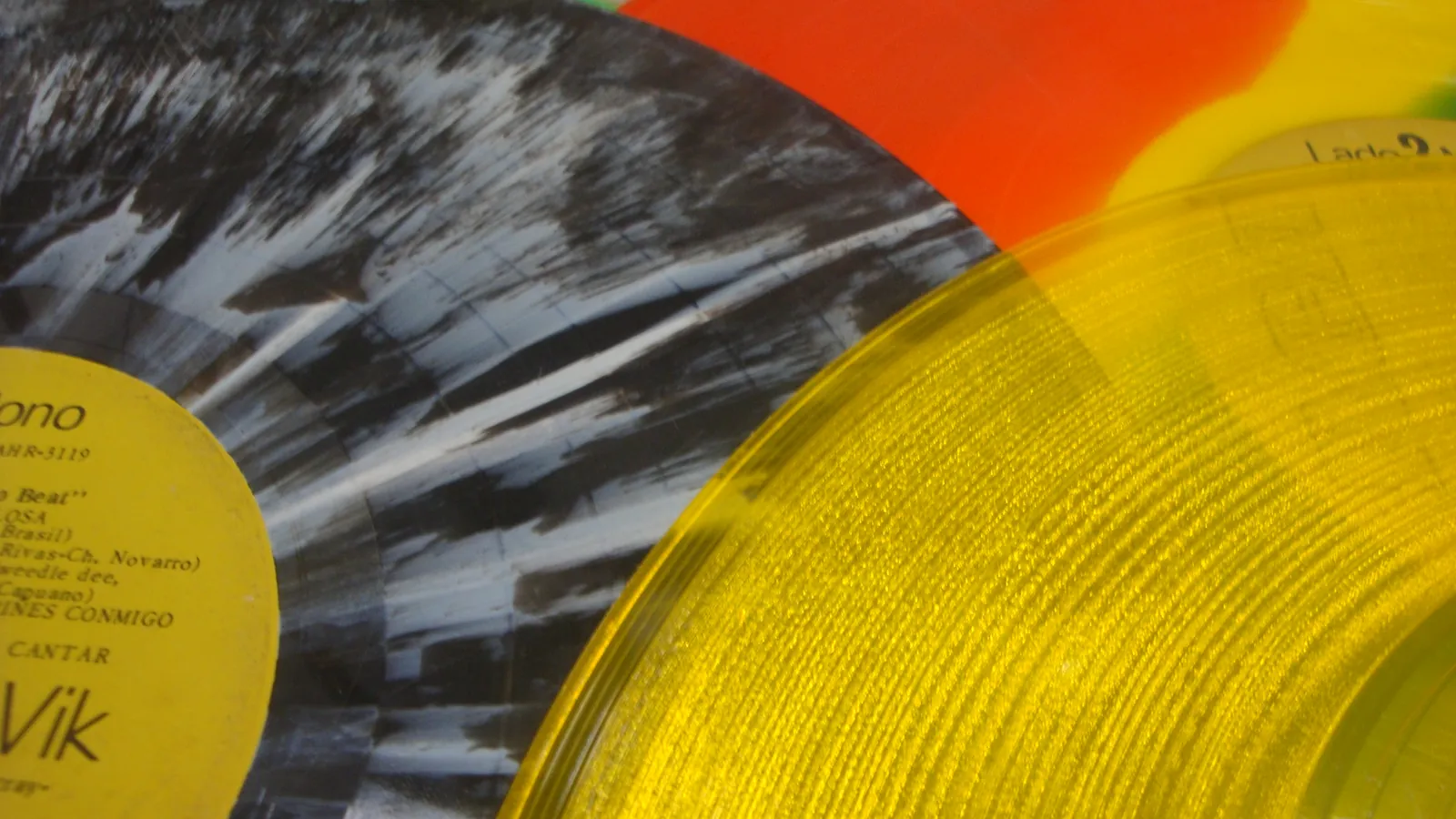
Colored Vinyl vs Black: Does It Sound Worse?
Solid and translucent colours generally sound the same as black vinyl today. Marble, splatter and picture discs are the riskier tiers to know.
180g Vinyl vs Standard Weight: Does It Sound Better?
180g and standard records use the same stampers and groove depth. The extra weight adds durability and a premium feel, not automatically better sound.
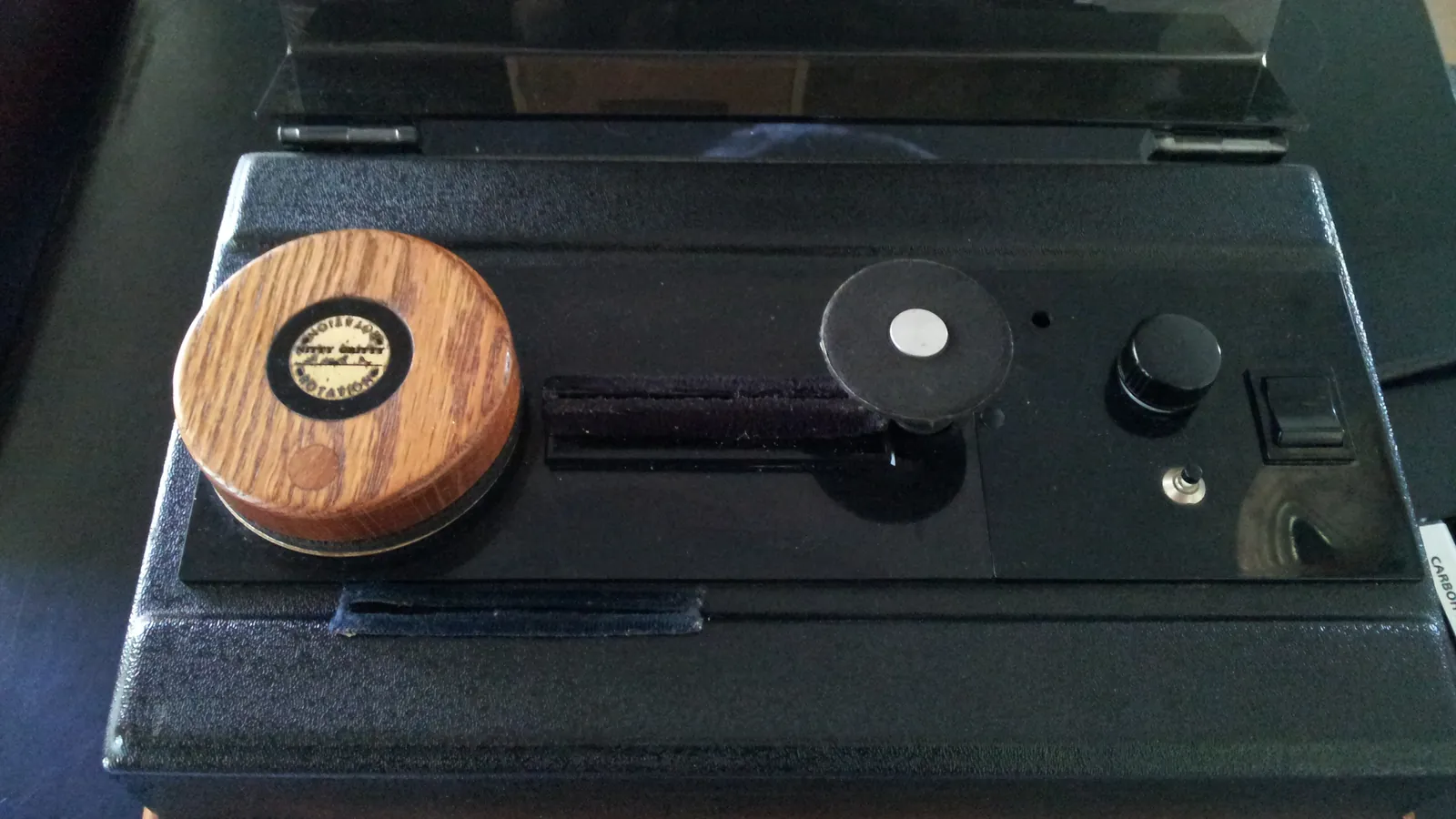
How to Clean Vinyl Records Safely: Brush, Wet or Machine
A soft brush before every play clears most dust; stuck-on grime needs a wet clean. Here's what conservators recommend, and what to avoid entirely.