
Colored Vinyl vs Black: Does It Sound Worse?
Solid and translucent colours generally sound the same as black vinyl today. Marble, splatter and picture discs are the riskier tiers to know.
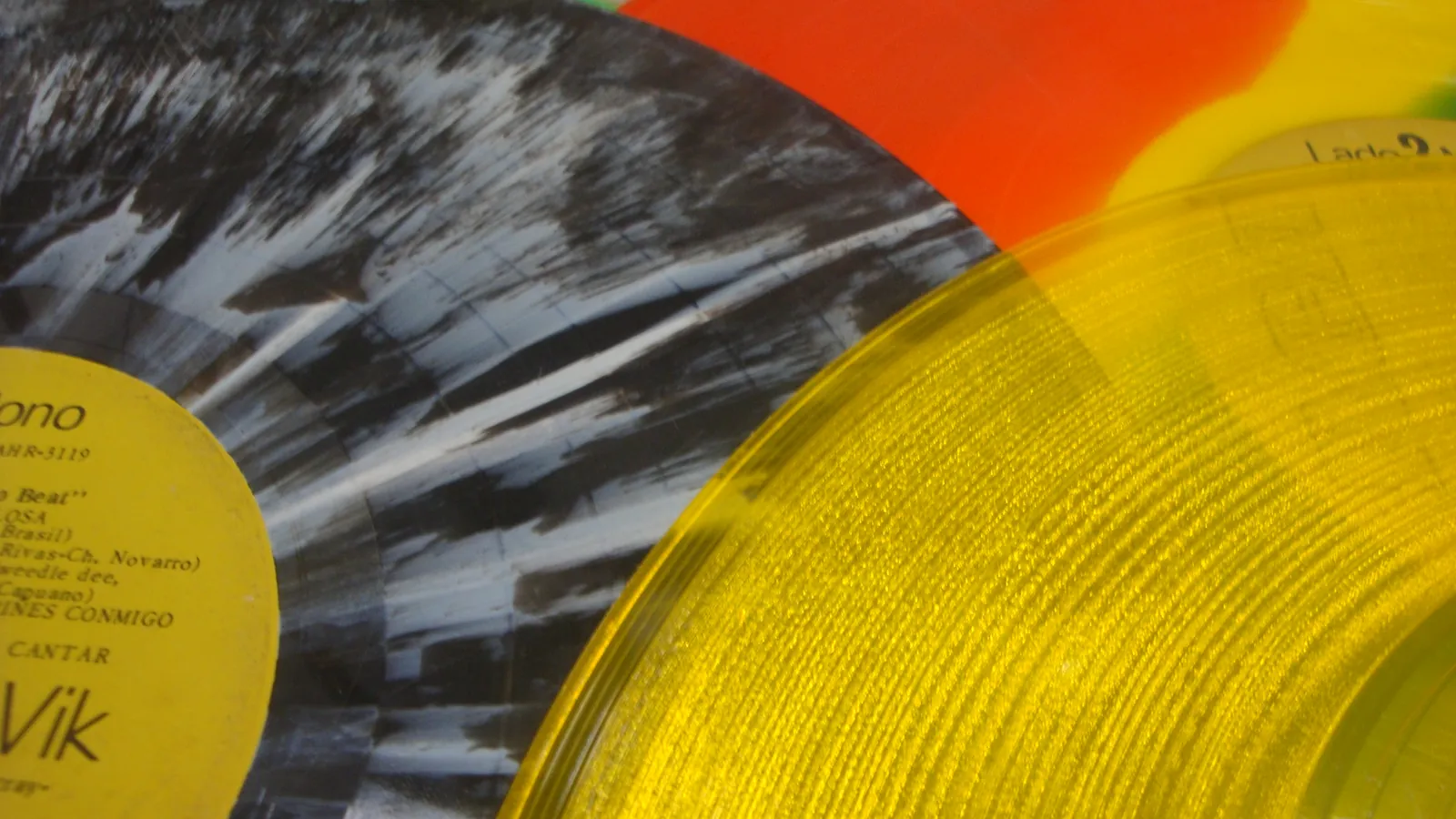

A standard solid or translucent coloured record generally sounds the same as a black pressing of the same release today. Where colour genuinely starts to matter is further up the novelty scale — marble, splatter and swirl effects are harder to press consistently, and picture discs and glow-in-the-dark vinyl involve real sonic trade-offs. Colour itself isn't the risk; how much the pressing process has to change to achieve it is.
Here's why black became the default in the first place, and a practical hierarchy of which colour effects are safe and which ones genuinely cost you something.
The question comes up so often precisely because coloured vinyl has become the norm rather than the exception for new releases and reissues alike — most collectors now own more coloured variants than plain black ones, which makes it worth knowing which colour choices are genuinely a gamble and which aren't a gamble at all.
Why most records are black in the first place
Black isn't the default by accident. Carbon black — the pigment that gives standard vinyl its colour — does real work in the pressing compound: it strengthens the mix, reduces static build-up, and improves durability, according to both Disc Makers and Unified Manufacturing. Coloured vinyl uses dye-based pigments instead, which don't reinforce the compound the same way — a real, if generally small, difference that mostly shows up as very slightly reduced durability rather than as an audible one.
That's also why black remains the default for pressings where consistency matters most commercially — a major first run of a big release is more likely to default to black precisely because it's the known, lowest-variance option, while colour is reserved for limited runs, reissues and special editions where a bit more variability between copies is an acceptable trade for a distinctive look.
The hierarchy of vinyl colour and sound
Disc Makers frames colour options as a rough tier system, from safest to riskiest:
| Tier | Colours | What's going on |
|---|---|---|
| 1 — the benchmark | Standard black | Carbon black compound; the "lowest-risk choice" for extracting every last bit of performance. |
| 2 — virtually identical | Clear, solid colour, translucent | The vast majority of coloured records pressed today; performance extremely close to black. |
| 3 — slightly more variable | Marble, splatter, swirl, metallic | Multiple compounds mixed together, which makes consistency a little harder to achieve; metallics tend to add a bit more surface noise. |
| 4 — collectability first | Picture discs, glow-in-the-dark | Real sonic compromises, in exchange for a visual effect standard pressing can't achieve. |
The jump that matters most is between Tier 2 and Tier 3: a plain colour swap is low-risk, but any effect that requires blending more than one compound together is where consistency — and by extension, sound — gets harder to guarantee. Knowing which tier a specific pressing falls into before you buy is mostly a matter of reading the listing carefully: "translucent red" is Tier 2, "red and black marble" or "splatter" is Tier 3, and "picture disc" is its own category entirely.
Do this in the app:Sleevewise · Collection
What actually causes the difference
The effects in Tier 3 need more than one pigment or compound mixed into the vinyl at once to create their pattern, and that mixing process is inherently less uniform than a single-compound pour — which is exactly why marble and splatter pressings vary more from copy to copy than a plain colour run does.
Tier 4 is where the compromises get more specific. Unified Manufacturing cites pressing plant Pirate Press on glow-in-the-dark vinyl directly: the phosphorescent pigments used to make a record glow "degenerate the acoustic properties of the recording pressed on them," and increase surface noise on top of that. Picture discs have a different problem again — they're built by laminating a printed image between two thin layers of clear vinyl rather than pressing a single solid puck, a construction method that trades some fidelity for the ability to print a full image across the playing surface.
Colour isn't the risk. Mixing extra compounds into the vinyl to get an effect is.
A well-pressed colour record beats a badly pressed black one
It's worth saying plainly: pressing quality control matters far more than the colour itself. Disc Makers makes this point directly — a well-pressed coloured record will almost certainly sound better than a poorly pressed black one. Black is the lowest-risk choice on average, not a guarantee, and a sloppy pressing run at any tier can underperform a careful one at a higher-risk tier.
This is the same principle that runs through most format debates in vinyl: the variable people argue about — colour, weight, speed — is rarely the biggest lever on actual sound quality. A reputable pressing plant with good quality control will turn out a better-sounding record at nearly any tier than a corner-cutting one will manage even in the "safest" black pressing.
Practical differences beyond sound
Colour affects more than the audio. Clear and light-coloured vinyl shows dust, fingerprints and scuffs more visibly than black does, simply because there's less dark surface to hide them against — which makes regular cleaning more visibly worthwhile on a clear or pale pressing, even if the underlying dirt is no different from what a black record would collect. Static behaviour can also differ slightly given carbon black's static-reducing role in the standard compound, though this is a minor handling difference rather than a sound-quality one.
This cuts both ways when you're inspecting a copy before buying: a coloured or clear pressing actually makes it easier to spot certain surface issues at a glance precisely because marks show up more readily, while a black record can hide a light scuff that a raking light would catch anyway. Neither is a reason to avoid colour — just a reason to inspect a coloured copy with the same care you would a black one, rather than assuming the colour itself is doing any grading work for you.
Are colored variants worth more?
Each colour variant of a release counts as its own edition, not a cosmetic option on top of a single release — which is exactly the pattern behind box sets like Iron Maiden's 50th-anniversary collection, where each album in the set got its own distinct colour. Whether a specific colour variant is "worth more" than the standard pressing depends on how limited that variant's run was and how much demand there is for it, not on the colour itself carrying inherent extra value. A colour pressed in the same quantity as the standard edition, with no particular story behind it, tends to trade at roughly the same price once the initial release excitement fades — it's scarcity and demand doing the work, not the pigment.
Compare actual sold prices for that specific colour variant rather than assuming "coloured" automatically means "collectible," and catalogue the exact variant you own — colour is exactly the kind of detail that turns two entries for "the same album" into two genuinely different items, and it's worth grading each one on its own condition rather than assuming a rarer colour automatically means better condition too.
Frequently asked questions
01Does colored vinyl sound worse than black vinyl?
Generally, no. Standard solid or translucent coloured vinyl performs extremely close to black vinyl today. The riskier effects are ones that mix multiple compounds together, like marble, splatter and swirl pressings, and especially picture discs and glow-in-the-dark vinyl, which do involve real sonic compromises.
02Why are most vinyl records black?
Standard black vinyl uses carbon black as its pigment, which strengthens the pressing compound, reduces static and improves durability compared with the dye-based pigments used for coloured vinyl. It's the lowest-risk option for sound quality, though not the only one that sounds good.
03Are colored vinyl records worth more than black ones?
Not automatically. Each colour variant is technically its own edition, and its value depends on how limited the pressing run was and how much collector demand exists for that specific colour, not on being coloured in itself. Check sold prices for that exact variant rather than assuming a premium.
Judging a pressing on more than its colour
Colour is one of a handful of format details, alongside things like record weight and playback speed, that get more credit or blame for sound quality than the evidence really supports. In all three cases, mastering and pressing plant quality control decide far more than the format detail itself — worth remembering before paying a premium for a colour variant on sound-quality grounds alone, rather than for how it looks on the shelf.
Sources
- Which Vinyl Colors Sound Best? — Disc Makers Blog, 25 August 2026
- Is vinyl pressing different for black than the colored vinyl? — Unified Manufacturing
Keep digging
180g Vinyl vs Standard Weight: Does It Sound Better?
180g and standard records use the same stampers and groove depth. The extra weight adds durability and a premium feel, not automatically better sound.
How to Clean Vinyl Records Safely: Brush, Wet or Machine
A soft brush before every play clears most dust; stuck-on grime needs a wet clean. Here's what conservators recommend, and what to avoid entirely.
How to Store Vinyl Records: What Archivists Recommend
Store LPs upright, never stacked flat, with stable temperature and humidity. Here's the shelving, climate and sleeve advice from archival guides.