
How Much Are My Vinyl Records Worth? A Step-by-Step Guide
A record is worth what its exact pressing sells for in the same condition. How to check what your vinyl records are worth with sold prices, not asking prices.

.jpg)
A vinyl record is worth what copies of the same pressing, in the same condition, have recently sold for: not its age, and not the highest asking price you can find online. The most practical place to start is the release's sales history on Discogs, which gives the lowest, median and highest of its last 30 sales.
Condition moves that figure a long way. The Discogs grading guide, based on the Goldmine standard, puts a Very Good Plus record at generally 50% of the Near Mint value, and a Very Good one at 25%. The method follows from there: identify the exact release, grade the record and the sleeve separately, then compare with sold prices rather than asking prices.
The sections below follow those steps, then cover the traps that inflate prices and when to pay for a professional valuation.
Start with the exact pressing, not the album
Value belongs to a release, not to an album title. An original pressing, a later repress on the same catalogue number, a foreign pressing and a coloured-vinyl reissue can share the same artwork and sell for very different sums. On Discogs, a master release page only groups matching releases ("a folder that holds two or more Discogs releases", in its own words); the sales figures belong to each individual release.
To find yours, read the record as well as the cover:
- Catalogue number: on the spine, the back of the sleeve and the label.
- Label: its design, its colours and the small print around the edge.
- Barcode, if there is one: Discogs' database guidelines state that, generally, "a release with a barcode cannot have been made before 1979".
- Matrix or runout codes: stamped or etched into the blank vinyl between the last track and the label. The same guidelines note that they can carry engineer, studio or manufacturer marks, and that significant differences in them (a different company, credit or job number) indicate a separate release.
Discogs gives the same advice: compare the catalogue number, images and other identifiers with the release page. No single clue settles it; they have to agree. Our guide to telling whether a record is a first pressing goes through runout codes in detail.
Grade the record and the sleeve separately
Once you know the release, condition decides most of what your copy is worth. Discogs uses the Goldmine standard for everything listed on its Marketplace, and its guide attaches a rule of thumb to each grade below Near Mint:
| Grade | What it means for the vinyl | Rule of thumb in the Discogs guide |
|---|---|---|
| Mint (M) | Perfect in every way, never played, possibly still sealed | To be used "sparingly as a grade, if at all" |
| Near Mint (NM or M-) | Nearly perfect; plays with no imperfections | The reference value |
| Very Good Plus (VG+) | Played and handled with care; defects mostly cosmetic | Generally 50% of Near Mint |
| Very Good (VG) | Surface noise audible, especially in quiet passages | Generally 25% of Near Mint |
| Good (G), Good Plus (G+) | Plays through without skipping, with significant noise and wear | Generally 10–15% of Near Mint |
| Fair (F), Poor (P) | Cracked, badly warped, won't play through | Generally 0–5% of Near Mint |
Record Collector's Rare Record Price Guide, which the magazine describes as "the baseline worldwide" for grading, uses seven grades: Mint, then Excellent, Very Good, Good, Fair and Poor down to Bad. Its guide prices are for Mint copies, and "the value then tumbles according to the grading". The magazine's own example, from a 2015 article on grading: The Kinks' Kontroversy (1965, Pye NPL 18131), £100 in Mint, £2.50 in Bad.
The sleeve has its own grade. Collectors describe record and sleeve "as separate parties", in Record Collector's phrase, and a sleeve picks up wear the vinyl doesn't show: bumped corners, ring wear, split seams, writing. Missing parts cost money too. A record issued with inserts, a poster or a free single needs all of them, in pristine condition, to reach the top grades, and under the Rare Record Price Guide's rules a Mint single with a label sticker removed can be VG+ at best. Our guide to Goldmine grading shows how to inspect a copy first.
Condition is not a detail you add after pricing a record: on most copies, it is most of the price.
Rarity and demand are not the same thing
A record sells high when more people want it than there are copies in the condition they want. Age alone doesn't do that, and neither does a small pressing nobody is looking for.
The same Record Collector article, by Ian Shirley, shows both ends. Spandau Ballet's 1981 debut, Journeys to Glory, and later albums such as Diamond and True sold "by the million", so copies were still easy to find in charity shops. Dusk Fire by the Don Rendell & Ian Carr Quintet (1966) sold "a few thousand rather than a few million", and the magazine priced a Mint copy at £800.
Big sellers can still be expensive at the very top of the scale. Records that sold "countless thousands", Black Sabbath's early albums among them, were very expensive at book price because unplayed copies are almost impossible to find: the scarcity is in the condition, not the title. Demand moves as well: in 2015, Shirley noted that Elvis Presley's values were "deflating".
You can read current demand on Discogs. Each release page has a Statistics section giving the number of users who have the record and who want it, next to its sales statistics. Many owners and few people wanting it points to a common record; a long list of wants against a thin supply is what pushes prices up.
Do this in the app:Sleevewise · Value
Sold prices, not asking prices
An asking price is what a seller hopes to get; a sold price is what a buyer paid. Only the second tells you what a record is worth, and asking prices can drift a long way from it. Discogs treats listings priced "far above average sales history prices", without an explanation, as joke listings it can remove, and its buying advice points out that items valued at $200 "aren't typically sold for $20".
These sources record completed sales:
| Source | What it records | Coverage |
|---|---|---|
| Discogs sales history | Marketplace sales of that exact release; lowest, median and highest of the last 30 | Every release page; log in for the latest figures |
| eBay completed listings and Product research | Items that sold; Product research, for sellers with Seller Hub, includes the price paid when a Best Offer was accepted | Completed listings: the previous 90 days; Product research: up to 3 years |
| Popsike | Verified completed eBay sales of records that sold for around US$20 or more, "not estimates or asking prices" | Since 2004, usually updated daily |
Reading the Discogs figures well takes two habits. Compare like with like: open the individual sales from the Last Sold date on the release page, and weigh the ones in your copy's condition. A median built from Near Mint copies overstates a VG one. The suggested price Discogs shows sellers works the same way: it is based on the media condition selected and recent sales "in similar conditions". Then trust the middle more than the top. One high sale can be two collectors outbidding each other, or a generously graded copy; the median of 30 sales is much harder to move.
Price guides fill in where sales are thin. For UK releases, the Rare Record Price Guide 2026, the eighteenth edition and the first edited by Daryl Easlea, lists current Mint values for every UK LP, single, EP and 12-inch worth over £15, across more than 100,000 entries compiled with dealers, collectors, shops and auction houses. Record Collector also publishes it as a subscription website that it says is updated daily. A guide price is a reference for a Mint copy, not a sale: Record Collector itself noted in 2015 that a truly Mint Rubber Soul will fetch much more than its £250 guide price, while a creased, scratched copy "will not be worth half the amount in a buyer's mind".
The value Sleevewise shows for each record also comes from the Discogs Marketplace: the lowest price that exact release is currently listed at, recorded over time so you can watch it move. That makes it a quick guide across a whole shelf rather than an appraisal of your copy. Before you sell or insure anything that matters, run the sales-history check above.
Traps that inflate a record's price
A reissue sold as an original. A repress can carry the original catalogue number and a faithful copy of the sleeve. The record usually gives it away: a barcode generally rules out a pre-1979 pressing, and the runout has to match the release it claims to be. Discogs requires sellers to list the exact release they hold, using details such as the year, barcode and matrix code. As a buyer, ask for photos of the label and the runout before paying an original's price.
"Rare" on the sleeve. A shop sticker or a listing that says rare proves nothing by itself, and Discogs' database rules state that stickers applied after manufacture do not, on their own, make a different release. "Limited edition" on a new pressing tells you there was a cap, not that the cap was small compared with demand. The have and want counts, and the sales history, settle it.
"Mint" in a listing. Discogs says the grade should be used sparingly, if at all, and Record Collector's view is that for LPs from the 1950s to the 1990s, Excellent is probably the best condition you will find in the field. Trust the description and the photos over the letter.
Counterfeits. A copy priced far below its usual sales can be a fake as easily as a bargain. Discogs' advice is short: "If a price looks too good to be true, it probably is." Blurry artwork, a pixelated barcode and a runout that doesn't match the catalogue number are the classic signs; our guide to spotting counterfeit vinyl has the full checklist.
When a professional appraisal is worth paying for
For most records, the checks above are enough. A written valuation from a specialist dealer or an auction house earns its fee when the figure has to convince someone else (an insurer, the executors of an estate, a buyer for a whole collection) or when a single item has almost no sales to compare with, such as a test pressing, an acetate or a promotional copy with an unusual label.
Expect a range rather than one number. UK insurer Stanhope recommends a professional valuation for rare records and warns that some experts give a range because market prices shift; for a general figure, it points to sites such as Discogs, based on condition and recent sales. A valuation worth having names each pressing, gives the grade of record and sleeve, and shows the evidence behind each figure, so it can be checked later.
If the valuation is for a sale, the price a record fetches is not what you keep: Discogs charges sellers a 9% fee on the item price and shipping, and packing and postage come on top. A dealer buying a whole collection will offer less than it would fetch record by record, since they carry the time and risk of reselling it, but pays at once.
Frequently asked questions
01How can I find out how much my vinyl records are worth?
Identify the exact release from its catalogue number, label, barcode and runout codes, grade the record and the sleeve separately on the Goldmine scale, then compare with recent sold prices for that release in the same condition, for example in its Discogs sales history, rather than with asking prices.
02Is the Discogs collection value accurate?
It is a rough guide. Discogs estimates it from the last 30 Marketplace sales of each release, leaves out items with no sales history and describes it as only an approximate calculation. Check your most valuable records one by one against sales in the same condition.
03How much are old 45 records worth?
There is no single price. A 45 is valued like any record, by its exact pressing, the condition of the disc and sleeve, and how many collectors want it. Age alone adds little, so look up the release and its sold prices before assuming an old single is valuable.
Valuing and insuring a whole collection
A few hundred records don't need a few hundred appraisals. Most copies of big-selling albums can be checked in bulk. Spend your time on early pressings, promos and test pressings, numbered or limited runs, and anything that many Discogs users want, and look those up one by one.
For insurance, the paperwork matters as much as the total. Stanhope suggests an inventory listing artist, title, condition, purchase date, price paid and current estimated value, with photos, receipts and any valuations, and warns that some home policies have low limits for collectables or treat a whole collection as one item. The California Department of Insurance advises updating a home inventory at least once a year and keeping a copy somewhere safe away from home, such as a safe-deposit box or a relative's house. Cataloguing each record against its exact release, with both grades noted, keeps that list quick to update.
If you catalogue in Sleevewise, each record is matched to its Discogs release, graded for media and sleeve on the Goldmine scale and valued from current Discogs Marketplace listings that you can follow over time. Vinyl record value explains how the figures work, and the vinyl collection app page covers the rest.
Sources
- Where Can I Access Sales History? — Discogs Support, updated 12 December 2024
- How To Grade Items — Discogs Support, updated 22 July 2026
- Release Page Guide — Discogs Support, updated 31 March 2026
- Database Guidelines 5. Barcodes & Identifiers — Discogs Support, updated 31 March 2026
- How Does The Collection Feature Work? — Discogs Support, updated 3 June 2026
- What Is A Listing Violation? — Discogs Support, updated 19 August 2026
- Best Practices For Buying Safely On Discogs — Discogs Support, updated 11 June 2026
- How To Sell Music On Discogs — Discogs Support, updated 18 May 2026
- Making the Grades — Record Collector, 27 October 2015
- The Rare Record Price Guide 2026 — Omnibus Press
- Rare Record Price Guide Online — Record Collector
- Pricing your items — eBay
- Product research — eBay
- Frequently asked questions — Popsike
- Guide to insuring your vinyl collection — Stanhope Insurance, updated 5 August 2025
- Home Inventory Guide — California Department of Insurance
Keep digging
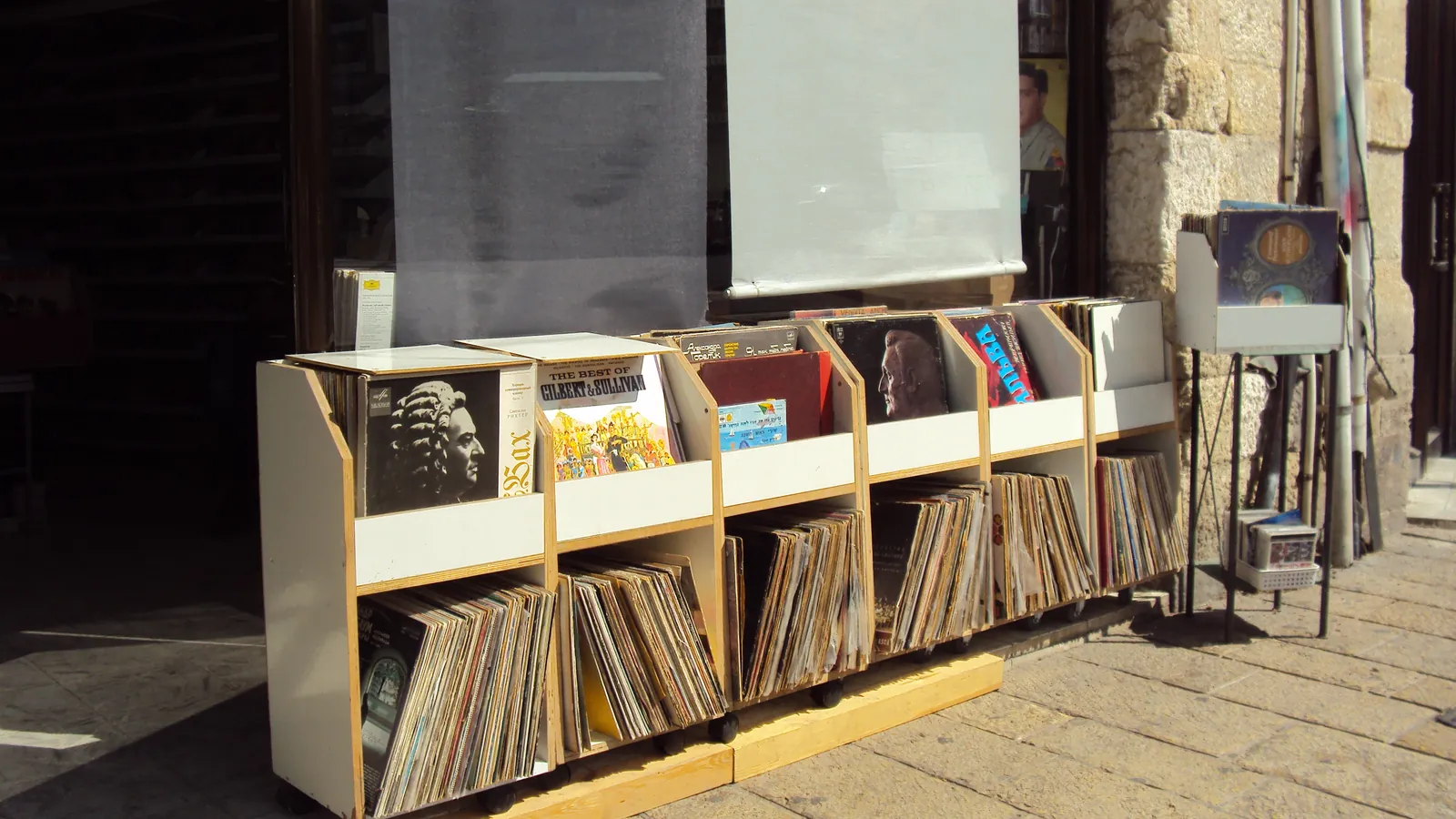
How to Catalogue Your Record Collection
Pick one system, identify the exact release, and log a few key fields per copy. Here's a practical way to catalogue vinyl and keep it current.
How to Grade Vinyl Records: The 8-Grade Goldmine Scale
The Goldmine scale grades records from Mint to Poor, media and sleeve separately. Here is what each grade means, and how to apply it honestly.
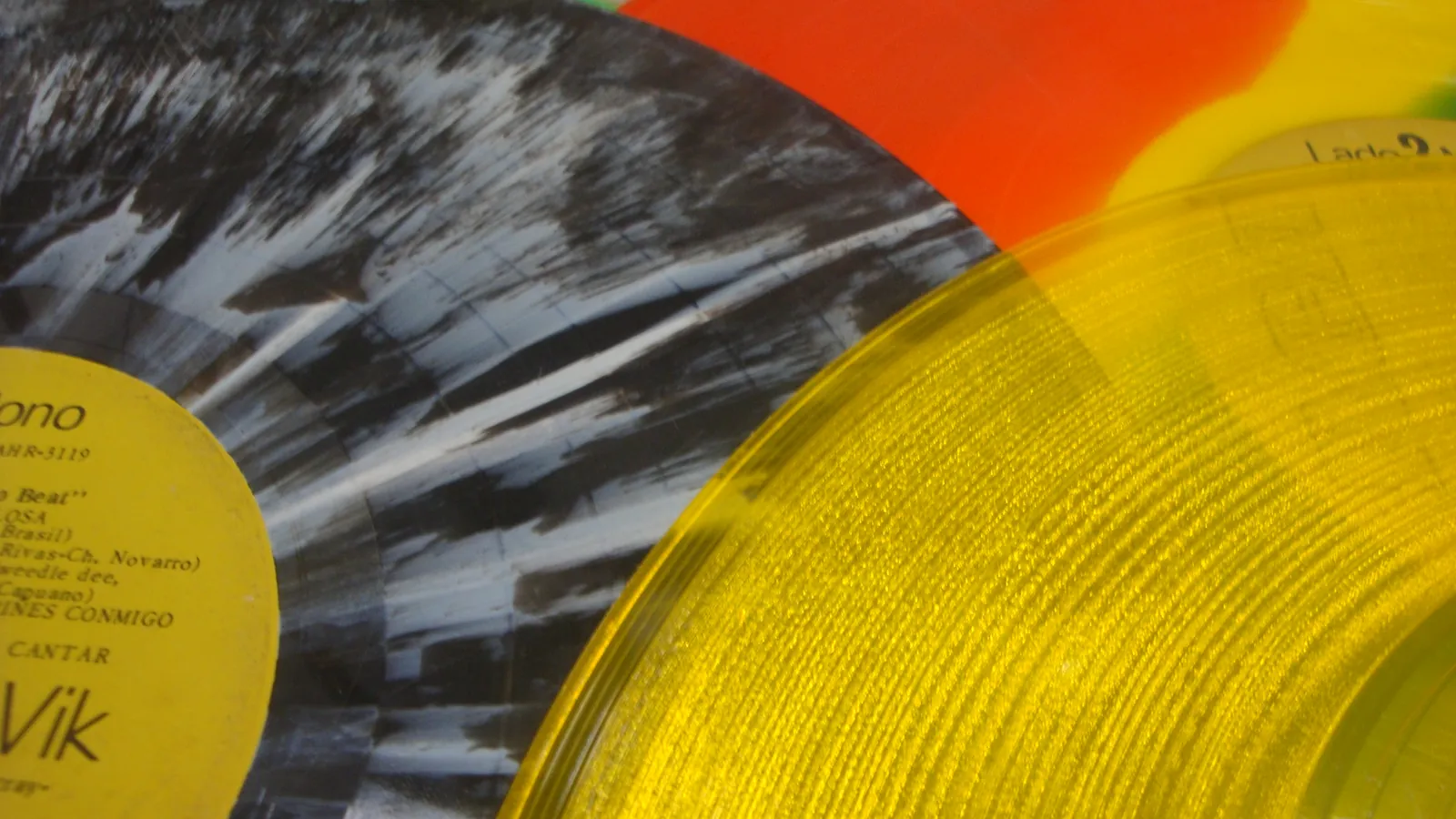
Colored Vinyl vs Black: Does It Sound Worse?
Solid and translucent colours generally sound the same as black vinyl today. Marble, splatter and picture discs are the riskier tiers to know.