
Obi Strip Value: A Guide to the Paper Band on Japanese Vinyl
An obi strip is the paper band on Japanese vinyl giving title, price and catalogue number in Japanese. What it says, why it adds value and how to spot fakes.
.jpg)
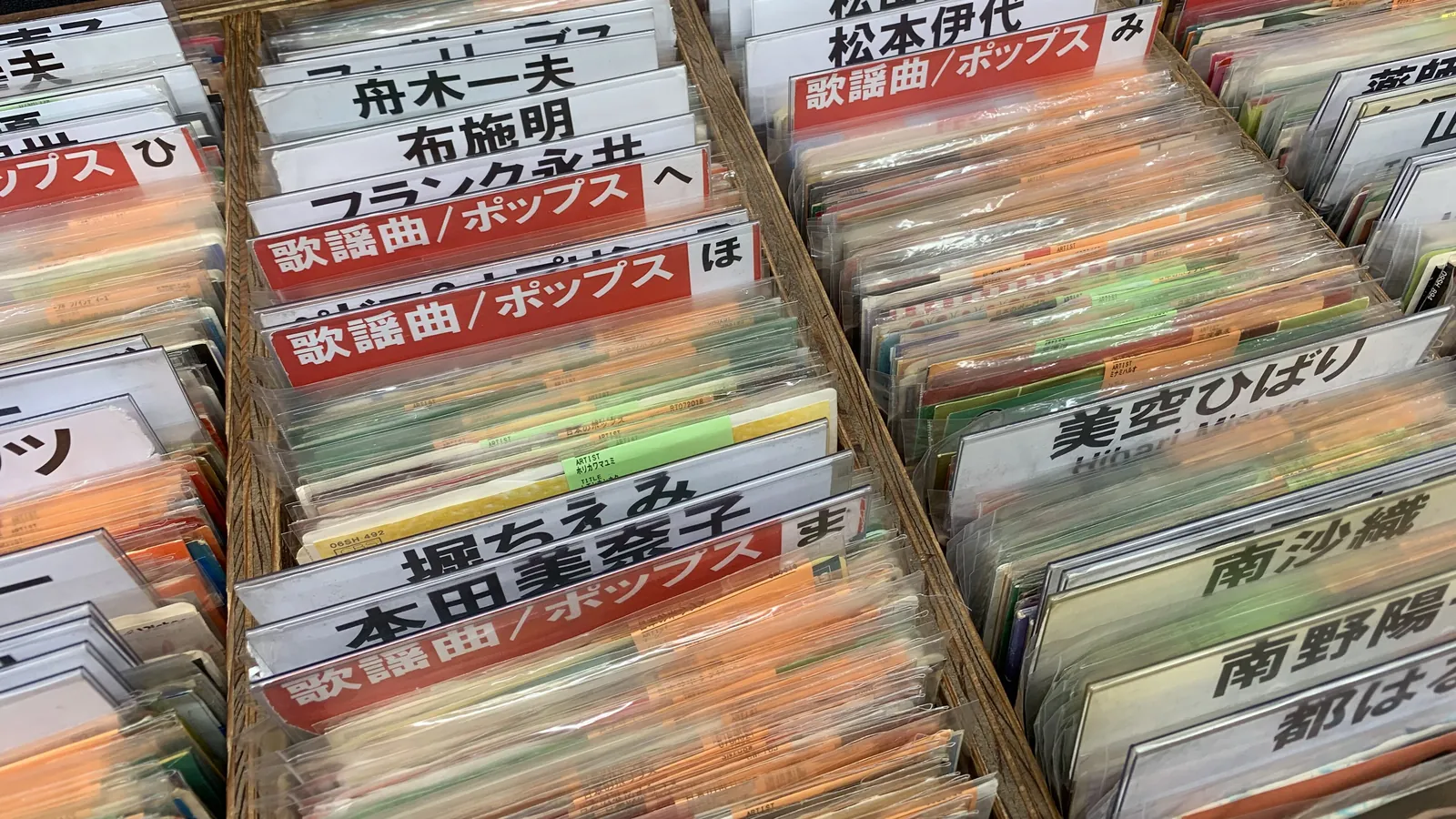
An obi is the strip of paper looped around the left edge of a Japanese record sleeve, or folded over its top, that gives the title, tracklist, price and catalogue number in Japanese. Wikipedia's entry on the obi sums up why collectors care: "a secondhand record or CD with a still intact obi may be worth more than the same with the obi missing."
The word means belt or sash, and it is written with the same kanji (帯) as the band tied around a kimono. Collectors often write it OBI or call it an obi strip. It was packaging, made to be thrown away, and many buyers did exactly that: that is the whole story of its value.
Below: where the obi came from, its shapes, what it tells you, what it adds to value, how to spot a reproduction, why labels outside Japan now use it, and how to look after one.
Where the obi comes from
The obi solved a practical problem. Japanese labels pressing Western music kept the original cover, but, as sabukaru puts it, they "needed the music they pressed to be easily recognizable by Japanese consumers shopping in record stores." The UK dealer eil.com adds the economic logic: the strip carried label, artist, catalogue number and price "without the need for manufacturing a completely different sleeve for the Japanese market."
Accounts differ on the date. sabukaru places it in the 1960s, as Japanese listeners took a growing interest in North American and European musicians. The Japanese-language Wikipedia article on the obi says the record industry is generally thought to have started adding them around the 1950s, to introduce the contents of Western records. The Tokyo record curators KAISHU VINYL split the difference: the obi "appears to have taken hold from the late 1950s into the 1960s, mainly on Japanese pressings of Western music."
It did not stay a foreign-music device. According to sabukaru, the strip "became standard even for domestic releases," and the Japanese Wikipedia article still describes the record obi as something specific to Japanese pressings. Shops used it too: English Wikipedia notes that the store can use the obi's details for ordering, and the dealer rarerecords.net suggests some retailers may have removed Toshiba's early half obis at the point of sale to reorder the record.
Wrap-around, over the top or half: the shapes of an obi
Wikipedia describes the LP obi as a strip "looped over one side (usually on the left) or folded over the top" of the sleeve. KAISHU VINYL gives the names Japanese collectors use:
| Shape | How it sits | What to know |
|---|---|---|
| Makiobi (wrap-around) | Wraps vertically around the left edge of the sleeve | The usual form on LPs |
| Kabuse-obi (over the top) | Slips over the top edge, text usually horizontal | Sits on the top of the sleeve like a cap |
| Hankake (half obi) | A shorter strip that stops partway | Rare: usually lost soon after sale |
Dealers treat the hankake as the rarest. rarerecords.net describes Toshiba's version, used in 1963 and 1964, as "a single strip of paper about nine inches long that simply hooked over the top of the cover via a 1/4″ fold of paper." It was usually glued on at the factory, "but most of the time, they were quickly lost." eil.com calls hankake obis "nearly impossible to find in any shape or form."
Some designs are collected as series. eil.com singles out the "Shaped Apple" obi that came with initial Japanese pressings of Beatles and Beatles-related records, and the "Rock Age" series used to introduce rock artists to Japanese buyers.
What an obi tells you
The Japanese Wikipedia article sets out the usual layout: the title in large type on the front, with a tagline, the catalogue number and the price in smaller print; on the back, often a list of related releases or an advert for playback equipment. KAISHU VINYL adds that the spine repeats the title so the record can be found when filed in a rack.
A real example from eil.com: the obi on a Japanese copy of Led Zeppelin II gives the catalogue number P-8042A, the Atlantic label and a price of ¥2,000. The Japanese Wikipedia article also makes a point that matters for identification: without the obi, the official Japanese title, catalogue number and price are sometimes impossible to establish.
The obi also helps date a copy, because it changed when the pressing did:
- eil.com notes that the obi design on Neil Young's debut changed between the Japanese first and second pressings.
- On microgroove.jp, Kohji Matsubayashi shows a Blue Note Japan LP whose obi still carries the Toshiba Musical Industries imprint while its label and cover say Toshiba EMI, the company's later name.
- rarerecords.net dates a Japanese Angel LP to 1964 from its catalogue number and its hankake obi, although another reference gives 1966.
Read the obi as one more clue alongside the label, the catalogue number and the runout, the way you would identify a first pressing.
Obi strip value: why complete copies cost more
The value comes from loss. sabukaru writes that because the strips "had little purpose after sale, many Japanese consumers threw them away, lost them, or damaged them," so original Japanese pressings that kept theirs can reach prices "well into the thousands." The Japanese Wikipedia article says the same of the trade at home: apart from large second-hand chain stores, Japan's used market sets different buying and selling prices depending on whether the obi is there.
How much difference? eil.com's April 2020 shop prices give a sense of scale. These are a dealer's asking prices, not recorded sales:
| Japanese copy (eil.com, April 2020) | With obi | Without obi |
|---|---|---|
| Jimi Hendrix, Electric Ladyland, early-1970s second pressing | £150 | £75 |
| The Beatles, Sgt. Pepper's, 1967 red vinyl | Obi adds £200 | — |
| Neil Young, debut LP, first pressing with Rock Age obi | Obi adds £300 | — |
There is no fixed obi premium. KAISHU VINYL notes that "whether an obi is present and what kind it is can change how a copy is valued," and the obi has a condition of its own: grade it separately from the sleeve, the way you would a poster or a lyric sheet.
Be careful with prices built on listings, too. Sleevewise shows a record's value as the lowest price that exact release is currently listed at on the Discogs Marketplace: an asking price for the release as a whole, not a sale, and it can't tell you whether the cheapest copy kept its obi. Read the seller's description before comparing it with a complete copy. Discogs treats the obi as part of the release: its image guidelines say permanent features "such as obis" should be the primary image when possible, so the release page may show what the obi should look like.
Do this in the app:Sleevewise · Value
How to spot a reproduction obi
An obi makes a copy look complete, which is exactly why it can't be taken on trust. The French resale software Margeo puts the rule plainly: an obi often improves completeness but authenticates neither the record nor the sleeve, because "un OBI peut être reproduit ou ajouté à un autre exemplaire" (an obi can be reproduced or added to another copy). Margeo's checklist: compare the obi's catalogue number and content with the exact release, then check the Japanese insert, the labels, the runout and the country of manufacture.
KAISHU VINYL lists the giveaways of a reproduction: "modern glossy paper, blurred small print, colours that don't match known examples, or folds in the wrong place." It adds three checks: the catalogue number on the obi should match the sleeve and label, the printed price should fit the era, and the wear should match. "An obi that has lived on a sleeve for decades usually shows wear in step with it."
Two cases look odd but are legitimate:
- Reissue obis. Official Japanese reissues often reproduce the original design, a fukkoku-obi. KAISHU VINYL calls these "genuine obi for the reissue," and the catalogue number tells you which is which. eil.com shows a 2014 Japanese reissue that came with a replica of the 1970s "Rock Age" obi.
- Obis on imported pressings. microgroove.jp records that when Toshiba began selling Blue Note LPs in 1966, they were not Japanese pressings: imported US pressings were sold with obis or stickers and Japanese inserts, and Toshiba's own Japanese pressings only started in 1968.
So an obi tells you where a copy was sold, not always where it was pressed. If the obi, label and runout don't tell the same story, treat the copy with the caution you would give any suspected counterfeit.
An obi tells you a copy kept its paperwork. It doesn't prove the paperwork belongs to that copy.
Obis on reissues from outside Japan
The obi has become a design choice for labels with no Japanese pressing involved. sabukaru notes that the UK's Daupe! and the US label Light in the Attic sell limited Japanese editions with an obi "as a nod to the highly celebrated tradition of Japanese pressings."
Three examples:
- Daupe! sold Westside Gunn and Conway's Hall & Nash (2016) in a "Japanese OBI" edition, "limited to just 20 copies worldwide," according to the label's Bandcamp page.
- Light in the Attic released Pacific Breeze in 2019, billed as the "first-ever authorized overview of Japan's 'city pop' genre outside of Japan." Spin reported that its deluxe bundles included "a custom die-cut obi."
- Wewantsounds, a Paris label, reissued The Milky Way's 1979 city pop album Summer-Time Love Song in 2026, its first release outside Japan; the label's description lists "an OBI strip." The same label gave Freddie Hubbard's Music Is Here: Live at ORTF, Paris 1973, a Record Store Day 2022 release, a gatefold sleeve and an obi designed by Raimund Wong, according to its website.
Pressing companies sell the format too: Pirates Press lists obi strips among its packaging options and describes them as "an interesting additional design element."
For a collector, these obis are part of the edition. A copy of a deluxe reissue without its obi is incomplete, but an obi on a reissue pressed in Europe or the US doesn't make it a Japanese pressing.
Frequently asked questions
01What is an obi strip on a vinyl record?
It is a strip of paper looped around the left edge of a Japanese record sleeve, or folded over its top, giving the title, tracklist, price and catalogue number in Japanese. The word means belt or sash.
02Does an obi add value to a record?
Usually, yes. Many obis were thrown away, so a second-hand Japanese record with its obi intact may be worth more than the same copy without it. There is no fixed premium: it varies with the record and the type of obi.
03Is a record with an obi always a Japanese pressing?
No. Toshiba sold imported US Blue Note pressings with obis in the late 1960s, and labels outside Japan now add obis to their own reissues. Check that the catalogue number, label and runout match the Japanese release.
Looking after an obi, and keeping track of it
An obi is thin paper, and KAISHU VINYL notes that it "tore, creased and went missing easily." A few habits protect it:
- Keep the obi on the sleeve, inside an outer sleeve roomy enough that it doesn't crush the fold.
- Hold the obi in place when you slide the jacket out of its outer sleeve, so it doesn't slip off and tear.
- Don't tape or glue a loose obi back on. Keep it in the outer sleeve with the record and say it's detached when you describe the copy.
- Store obi copies like any other record, upright and out of direct light, following the advice in our guide to storing vinyl records.
Then write it down. An obi changes what a copy is worth, so it belongs in the record of that copy, not just in your memory. In Sleevewise, the THIS COPY panel on each record keeps whether your copy has its OBI, alongside its hype sticker and inserts, and the app grades media and sleeve on the Goldmine scale. You can follow what your records are worth on vinyl record value, and keep the details of every copy in your vinyl collection.
Sources
- Obi (publishing) — Wikipedia, accessed 4 October 2026
- 帯 (出版) — Wikipedia (Japanese), accessed 4 October 2026
- The Grail of Vinyl Collectors: Obi — sabukaru, 29 September 2021
- Record Collecting: Everything You Wanted To Know But Were Afraid To Ask… Part 1: Obi-Strips — eil.com, 15 April 2020
- What Is an Obi Strip? A Collector's Guide to Japanese Vinyl — KAISHU VINYL, 28 July 2026
- Identifier un pressage vinyle : matrix, runout, first press et OBI — Margeo, 23 September 2026
- Blue Note Japan LP Releases: 1968-1977 — microgroove.jp, accessed 4 October 2026
- Aldo Ciccolini – Les Années De Pèlerinage 1964 Japan red vinyl LP hankake obi — rarerecords.net, accessed 4 October 2026
- Database Guidelines 13. Images — Discogs Support, accessed 4 October 2026
- Hall & Nash — Daupe! (Bandcamp), accessed 4 October 2026
- Light in the Attic Announce Japanese "City Pop" Compilation — Spin, 9 March 2019
- Summer-Time Love Song — Wewantsounds (Bandcamp), accessed 4 October 2026
- Wewantsounds — Wewantsounds, accessed 4 October 2026
- We want sounds (notice de marque) — Bibliothèque nationale de France, accessed 4 October 2026
- Obi-Strip — Pirates Press, accessed 4 October 2026
Keep digging
Test Pressing vs Promo vs White Label: How to Tell Them Apart
A test pressing checks the sound before a run, a promo goes to radio and press, a white label has no print. How to tell them apart and what drives their value.
What Is a Hype Sticker? Value, History and How to Keep One
A hype sticker is the promotional sticker a label puts on a record's shrink-wrap or sleeve. What it tells you, whether it adds value and how to keep it.
Colored Vinyl vs Black: Does It Sound Worse?
Solid and translucent colours generally sound the same as black vinyl today. Marble, splatter and picture discs are the riskier tiers to know.